
Post
Best Health Benefits of Cabbage 2026: Cancer-Fighting Compounds, Gut Health, and Vitamin K
May
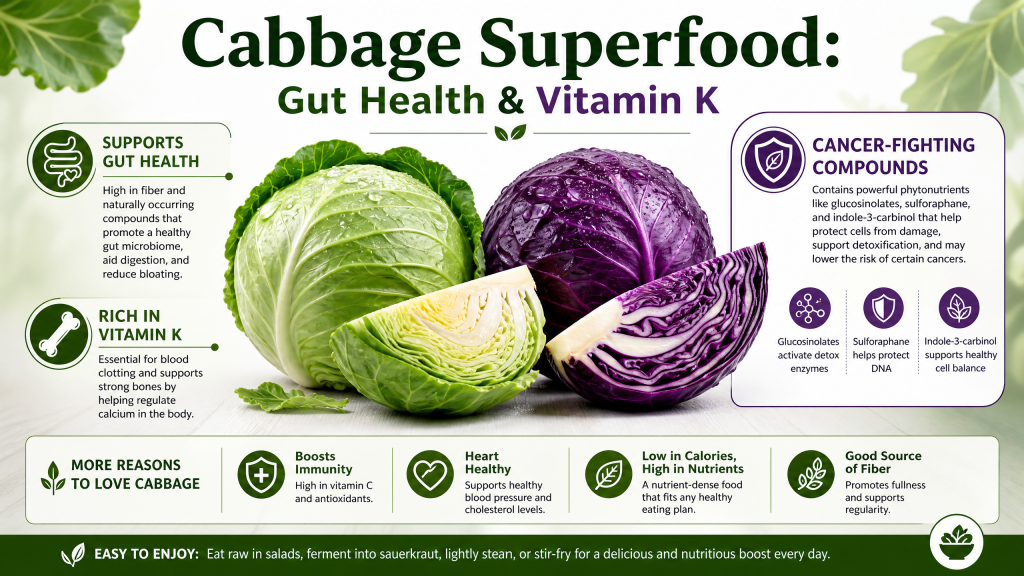
Cabbage Superfood: Cancer-Fighting Compounds, Gut Health, and Vitamin K
When it comes to optimizing your diet for long-term vitality, few strategies are as effective as understanding the science behind what you eat. The health benefits of cabbage represent a compelling area of nutritional research that continues to attract significant scientific attention.
Whether you are a health-conscious individual, a fitness enthusiast, or simply someone curious about food science, exploring the evidence behind the health benefits of cabbage will help you make smarter, more informed dietary choices.
To put this topic in broader context, it helps to understand how foods are classified and studied. According to Wikipedia’s comprehensive overview of fruit, plant-based foods — fruits and vegetables alike — contain thousands of bioactive compounds that nutritional scientists are still cataloguing and studying.
This rich chemical complexity is precisely why foods deliver benefits that isolated supplements often cannot replicate. The health benefits of cabbage are no exception: the combination of nutrients working together in whole food form creates synergistic effects that exceed what any single nutrient alone could produce.

Nutritional Foundation and Key Bioactive Compounds
Understanding the health benefits of cabbage begins with a close look at the nutritional profile of the food in question. Modern analytical techniques have revealed that whole foods contain not just the vitamins and minerals that appear on nutrition labels, but also hundreds of phytochemicals, flavonoids, polyphenols, and other bioactive compounds that influence cellular function in measurable ways.
These secondary metabolites — produced by plants as part of their own defense and communication systems — turn out to be extraordinarily beneficial for human health when consumed regularly as part of a varied diet.
The macronutrient composition provides the caloric foundation, while the micronutrients and phytochemicals drive the specific protective effects. Research consistently shows that people who consume the widest variety of plant-based foods experience the lowest rates of chronic disease, not because any single food is miraculous, but because the cumulative effect of diverse plant compounds on inflammation, oxidative stress, gut microbiome composition, and metabolic signaling is profound.
The health benefits of cabbage contribute meaningfully to this protective pattern.
Cardiovascular Benefits and Heart Protection
Heart disease remains the leading cause of death globally, and diet is one of the most powerful modifiable risk factors available to individuals who want to reduce their cardiovascular risk. The health benefits of cabbage offer multiple cardiovascular protective mechanisms that work through complementary pathways.
Soluble fiber found in many plant foods binds to cholesterol in the digestive tract, preventing it from entering the bloodstream and facilitating its excretion. Over time, this reduces LDL (low-density lipoprotein) cholesterol levels — the form most directly associated with arterial plaque formation and atherosclerosis. Antioxidant compounds meanwhile prevent the oxidation of LDL particles, which is a critical step in the progression from high cholesterol to actual arterial damage.
Potassium counteracts sodium’s blood-pressure-raising effects by relaxing the walls of blood vessels, reducing peripheral resistance, and supporting kidney function in excreting excess sodium. These mechanisms combine to produce a cardiovascular protective effect that extensive epidemiological research has repeatedly confirmed. For more in-depth reading on related cardiovascular topics, explore our complete nutrition and health article collection.
Anti-Inflammatory Properties and Immune System Support
Chronic low-grade inflammation is now recognized as the underlying driver of most common modern diseases, including type 2 diabetes, heart disease, certain cancers, arthritis, and neurodegenerative conditions like Alzheimer’s and Parkinson’s. The health benefits of cabbage contain multiple anti-inflammatory compounds that suppress inflammatory signaling pathways, particularly the NF-κB and COX-2 pathways responsible for producing pro-inflammatory molecules like cytokines, prostaglandins, and reactive oxygen species.
Flavonoids, carotenoids, polyphenols, and specific vitamins (particularly Vitamin C and Vitamin E) neutralize free radicals before they can trigger inflammatory cascades. Studies consistently show that people who consume anti-inflammatory plant foods regularly have lower blood levels of C-reactive protein (CRP), interleukin-6 (IL-6), and tumor necrosis factor-alpha (TNF-α) — the most widely used clinical markers of systemic inflammation.
Reducing these markers is associated with lower rates of virtually every chronic disease. The immune-enhancing effects of the health benefits of cabbage extend beyond inflammation reduction to include direct stimulation of immune cell production and function, particularly for natural killer (NK) cells, lymphocytes, and phagocytes.
Digestive Health and Gut Microbiome
The gut microbiome — the complex community of trillions of microorganisms living in the human digestive tract — is now recognized as one of the most important determinants of overall health.
Research published in high-impact journals over the past decade has linked gut microbiome composition and diversity to immune function, mental health, metabolic efficiency, cardiovascular risk, and even longevity. Dietary fiber, both soluble and insoluble, is the primary fuel source for the beneficial bacteria that maintain a healthy microbiome.
The health benefits of cabbage contribute to digestive health through multiple mechanisms: dietary fiber adds bulk to stool and speeds intestinal transit, reducing constipation and the time that potential carcinogens remain in contact with the intestinal lining; prebiotic fibers feed specific beneficial bacterial species; and natural plant compounds (including certain polyphenols) act as selective antimicrobials, suppressing harmful bacteria without disrupting the beneficial ones.
This comprehensive digestive support system reduces the risk of colorectal cancer, inflammatory bowel disease, and the metabolic consequences of dysbiosis (an imbalanced gut microbiome).
Blood Sugar Regulation and Metabolic Health
Metabolic health — encompassing blood sugar regulation, insulin sensitivity, and the absence of metabolic syndrome — is increasingly recognized as foundational to longevity and quality of life. Poor metabolic health underlies not only type 2 diabetes but also accelerates cardiovascular aging, increases cancer risk, impairs cognitive function, and reduces physical performance. The health benefits of cabbage support metabolic health through several well-established mechanisms.
Dietary fiber slows the absorption of carbohydrates from the digestive tract, preventing the rapid glucose spikes that trigger excessive insulin secretion and over time lead to insulin resistance. Specific polyphenols inhibit the activity of carbohydrate-digesting enzymes (alpha-amylase and alpha-glucosidase), providing an additional brake on post-meal glucose elevation.
Some plant compounds directly improve insulin sensitivity by reducing inflammation in fat cells and muscle tissue, which are the primary sites of glucose uptake. Clinical trials across many food groups consistently demonstrate that higher consumption of fiber-rich, polyphenol-rich whole plant foods is associated with lower fasting blood glucose, lower HbA1c, and lower rates of type 2 diabetes development.
Antioxidant Activity and Cellular Protection
Oxidative stress — the imbalance between free radical production and the body’s antioxidant defenses — is a fundamental driver of cellular aging and disease. Free radicals are generated continuously by normal metabolic processes, but their production is accelerated by inflammation, environmental toxins, UV radiation, poor diet, and physical stress.
When free radical production outpaces antioxidant defenses, oxidative damage accumulates in DNA, proteins, and cell membranes, accelerating aging and increasing disease risk.
The antioxidant compounds in plant foods — including Vitamin C, Vitamin E, carotenoids (beta-carotene, lycopene, lutein, zeaxanthin), and hundreds of flavonoids and polyphenols — work together to neutralize free radicals before they cause damage. Crucially, plant-derived antioxidants also activate the body’s own internal antioxidant systems, including the Nrf2 pathway, which increases production of the body’s most powerful endogenous antioxidant enzymes.
This two-layer protection system (external antioxidants from food + stimulation of internal antioxidant production) is far more effective than any supplement could achieve. The health benefits of cabbage contribute significantly to this protection system when consumed as part of a regular dietary pattern.
Bone Health, Muscle Function, and Physical Performance
Bone density and muscle function decline with age, but this decline is far from inevitable. Nutritional choices made across the lifespan significantly influence skeletal integrity, muscle mass maintenance, and overall physical capability into older age.
Key bone-supporting nutrients found in plant foods include Vitamin K (which activates osteocalcin, the protein that binds calcium to the bone matrix), magnesium (which regulates calcium transport and vitamin D metabolism), potassium (which reduces calcium loss in urine), and Vitamin C (which is required for collagen synthesis — a major structural component of both bone and connective tissue).
The health benefits of cabbage provide meaningful contributions to these bone-supporting nutrients. Regular consumption of diverse plant foods — combined with adequate calcium and Vitamin D from other sources — supports higher bone mineral density and reduces fracture risk across the lifespan.
The anti-inflammatory properties of these foods also protect joints from the inflammatory processes that underlie osteoarthritis and rheumatoid arthritis, helping maintain mobility and physical independence well into older age.
Skin Health, Anti-Aging, and Cosmetic Benefits
The skin reflects internal health more directly than most people realize. Inflammation, oxidative stress, poor collagen synthesis, and nutritional deficiencies all manifest visibly in the skin, while a nutrient-dense, antioxidant-rich diet supports a healthy, youthful complexion from within. Vitamin C is the rate-limiting nutrient for collagen production — without adequate Vitamin C, collagen synthesis slows and skin loses its firmness and elasticity.
Vitamin A (from carotenoids) supports skin cell renewal and turnover, reducing dullness and helping manage acne. Vitamin E protects cell membranes from UV-induced oxidative damage.
Carotenoids — including beta-carotene, lycopene, and lutein — are deposited in the skin and provide measurable UV protection from within. Studies have demonstrated that people with higher carotenoid intake have greater skin protection against UV damage, better skin color (more golden tone, associated with attractiveness and health across cultures), and reduced rates of photoaging, including fine lines, age spots, and uneven texture.
The health benefits of cabbage support all of these skin-health mechanisms, making dietary choices a genuinely important complement to any topical skincare regimen.
Weight Management and Appetite Regulation
Sustainable weight management depends not on restrictive dieting but on finding foods that provide genuine satiety and nutritional value at a caloric cost that supports a healthy energy balance.
High-water, high-fiber, low-calorie-density foods are the gold standard for weight management, because they allow you to eat satisfying volumes of food while maintaining a caloric deficit or balance. The health benefits of cabbage exemplify this ideal: nutrient-dense, filling, and versatile enough to incorporate into virtually any meal.
The fiber in these foods delays gastric emptying, stretching the stomach and triggering satiety hormone release (including peptide YY and GLP-1) while suppressing the hunger hormone ghrelin. Studies consistently show that meals containing high-fiber plant foods result in lower total calorie consumption at subsequent meals — sometimes by 10-20% — without any conscious caloric restriction.
Over time, diets centered around nutrient-dense whole plant foods are among the most effective strategies for achieving and maintaining a healthy weight, far outperforming restrictive diets that eliminate entire food groups.
Practical Tips to Maximize the Benefits
To extract maximum value from the health benefits of cabbage, consider these evidence-based practical strategies. Consume a variety of colors in your plant food intake, as different pigments indicate different phytochemical profiles — eating the rainbow ensures broad nutritional coverage. Pair fat-soluble nutrients (Vitamin A, E, K, carotenoids) with a source of healthy fat to maximize absorption; carotenoid absorption increases several-fold when consumed with olive oil, avocado, or nuts.
Minimize overcooking, as heat degrades some nutrients (particularly Vitamin C and folate) — light steaming or roasting for short periods preserves the most nutrition while improving palatability and bioavailability of certain compounds.
Keep portions consistent and regular rather than occasional: the health benefits of plant foods accumulate through consistent daily intake over months and years, not from sporadic consumption. Finally, diversify your sources rather than relying heavily on a single food — the synergistic effects of many different plant foods consumed together exceed what any single food can achieve alone.
Conclusion: Building a Healthier Life Through Informed Choices
The evidence supporting the health benefits of cabbage is robust, multifaceted, and consistent across decades of nutritional research. From cardiovascular protection and immune enhancement to metabolic health, bone support, and anti-aging effects, the mechanisms are well-understood and the clinical evidence is compelling.
Making these foods a regular, prominent part of your dietary pattern represents one of the highest-value investments you can make in your long-term health and quality of life.
For those interested in expanding their knowledge further and exploring related topics in nutrition and wellness, our nutrition and wellness blog offers a comprehensive library of evidence-based articles covering all aspects of healthy eating, from individual foods to complete dietary patterns.
Start with one simple change today — add one more serving of nutrient-dense whole plant food to your daily routine — and let the evidence guide you toward the healthier life you deserve.
